Hello, RPV.
On Sunday, May 22, I went to the Kyushu 2-stroke meeting.
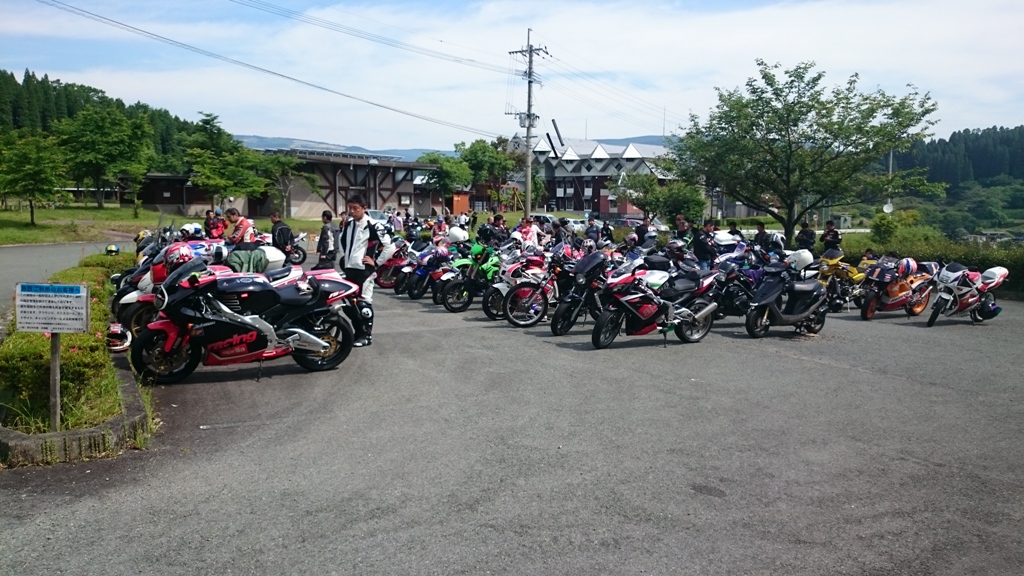
The location of the event is Kisotsukan (Oguni-machi, Aso-gun), and anyone who loves 2-stroke motorcycles is welcome to participate and feel free to join the event. The image below shows the scene around 10:00 a.m., before the event began, when about 110 2-stroke motorcycles were gathered in a small area. After this, the motorcycles continued to come in with high-pitched exhaust noises and fragrant? The motorcycles continued to gather one after another, emitting a high-pitched exhaust sound and fragrant exhaust smoke (^^;).;
Here is the greeting from the organizer. The organizer said that he was very worried about holding the event because it was right after the earthquake, but he made the decision to hold the event. In his greeting, we could sense his concern for the disaster area and the victims. I heard that Kikon Kan, which provided the venue for the event, will be open for business as usual from the Golden Week holidays.
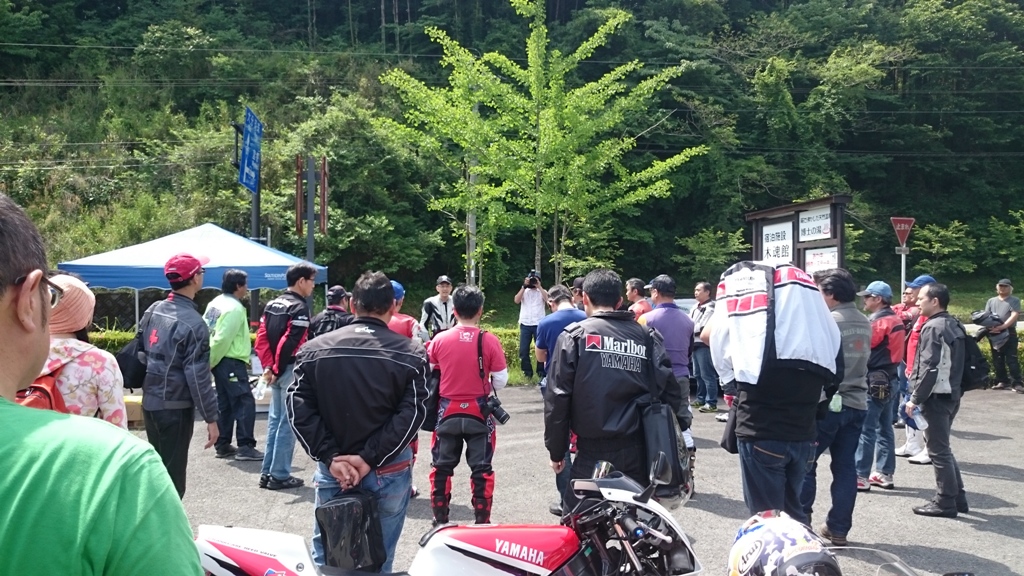
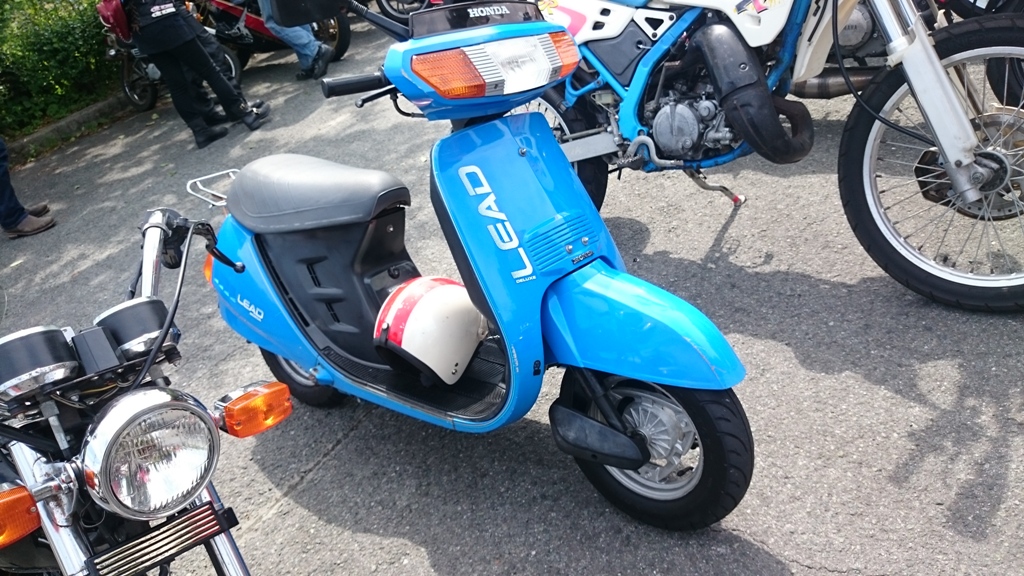
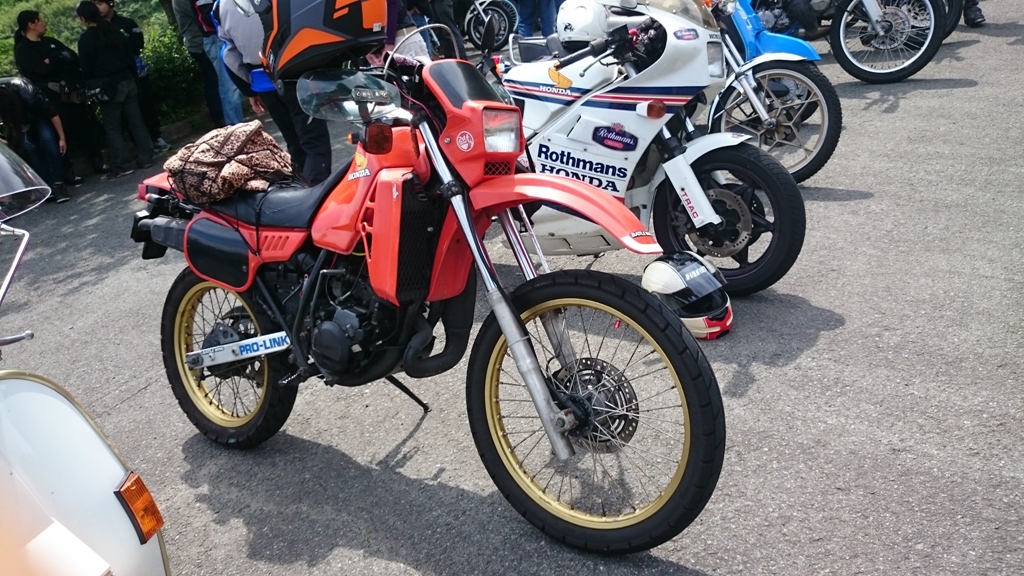
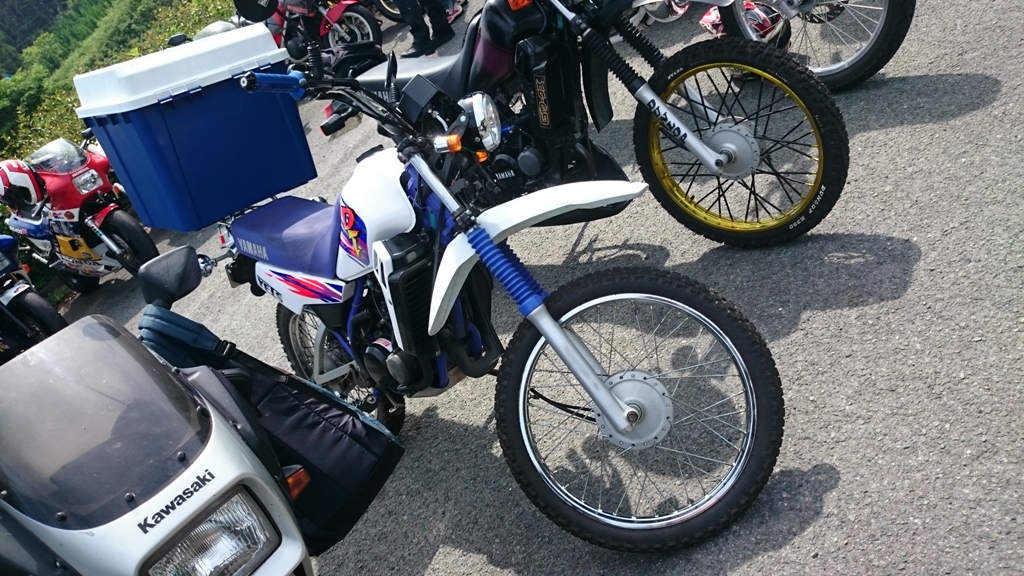
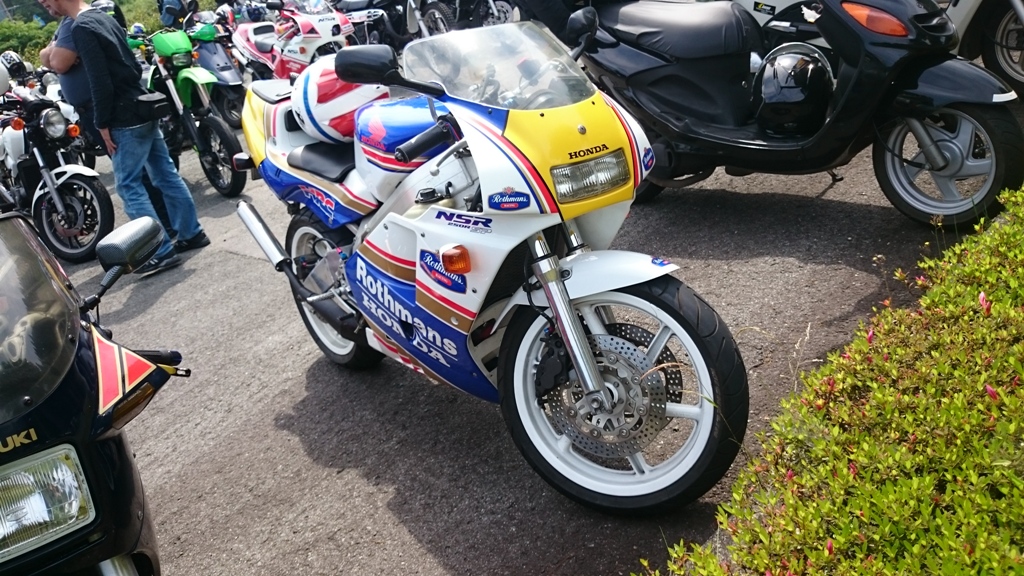
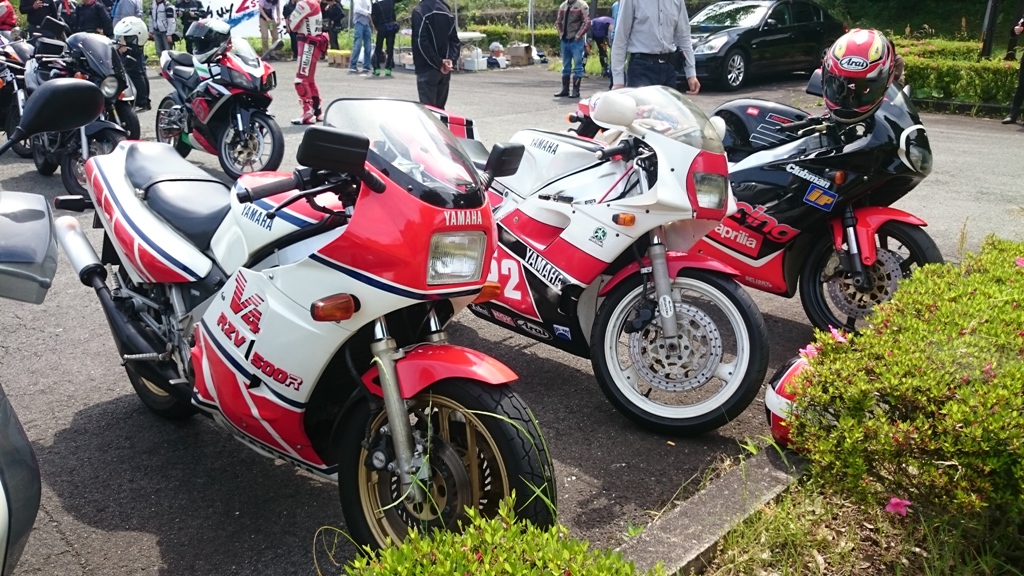
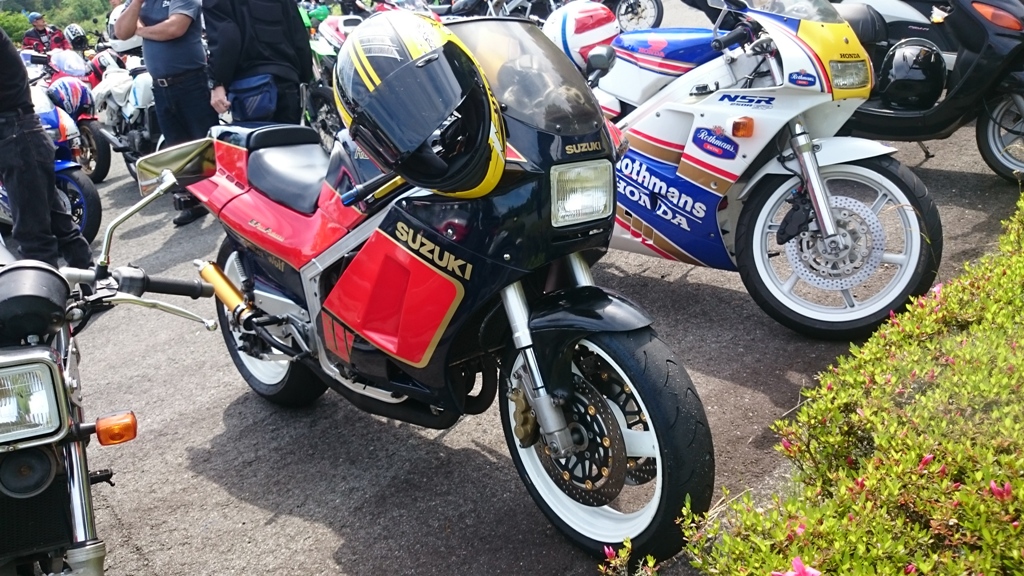
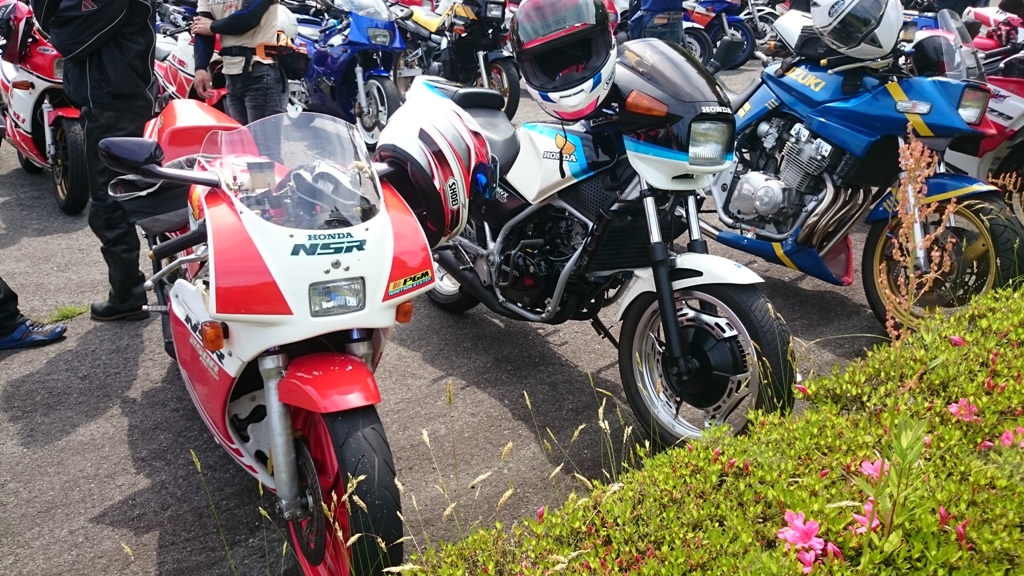
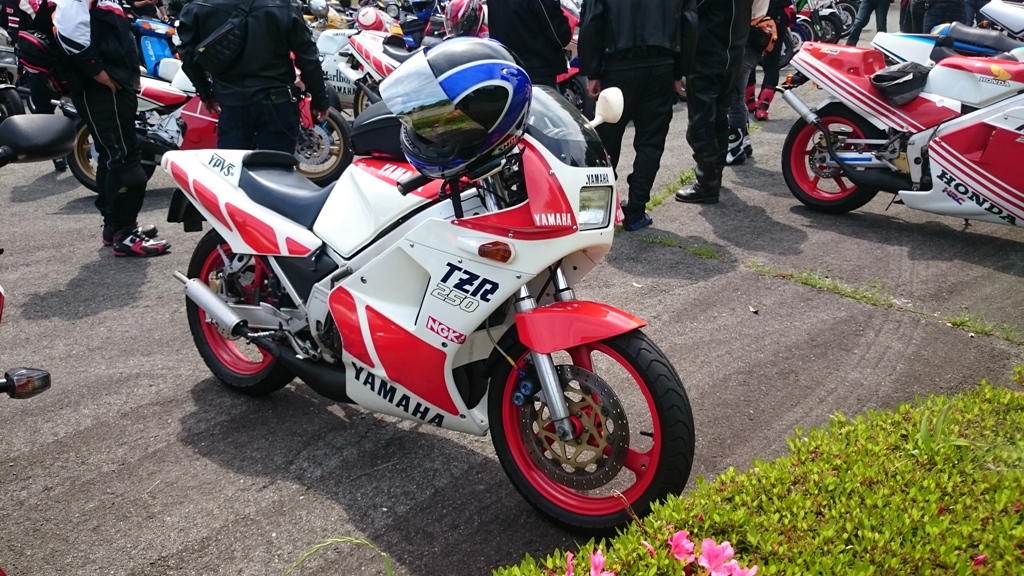
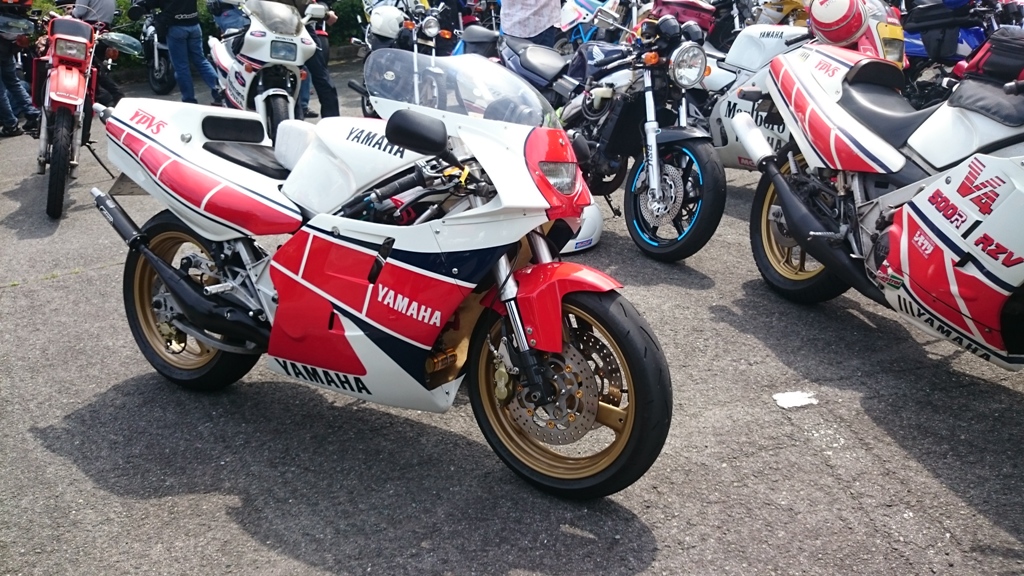
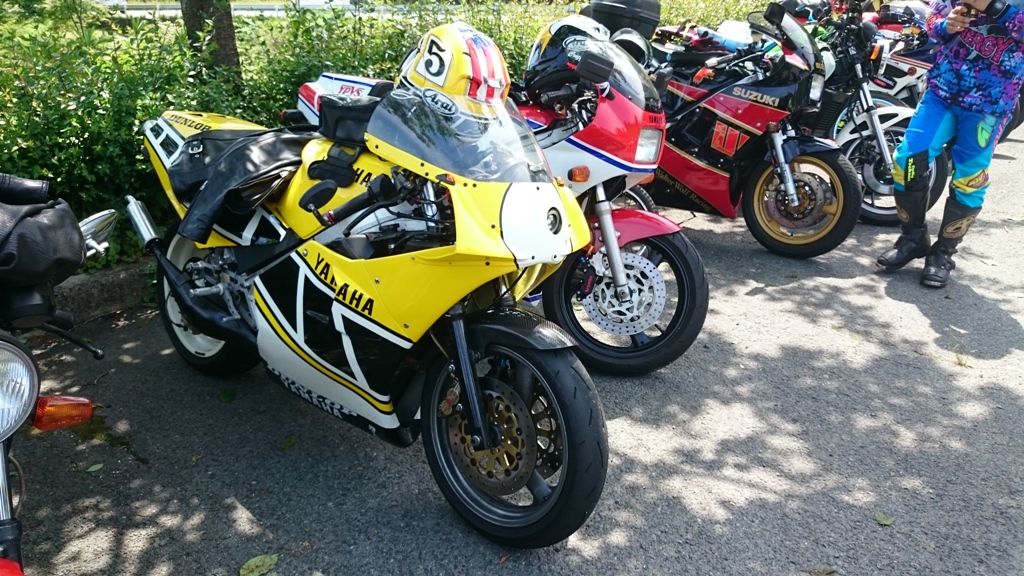
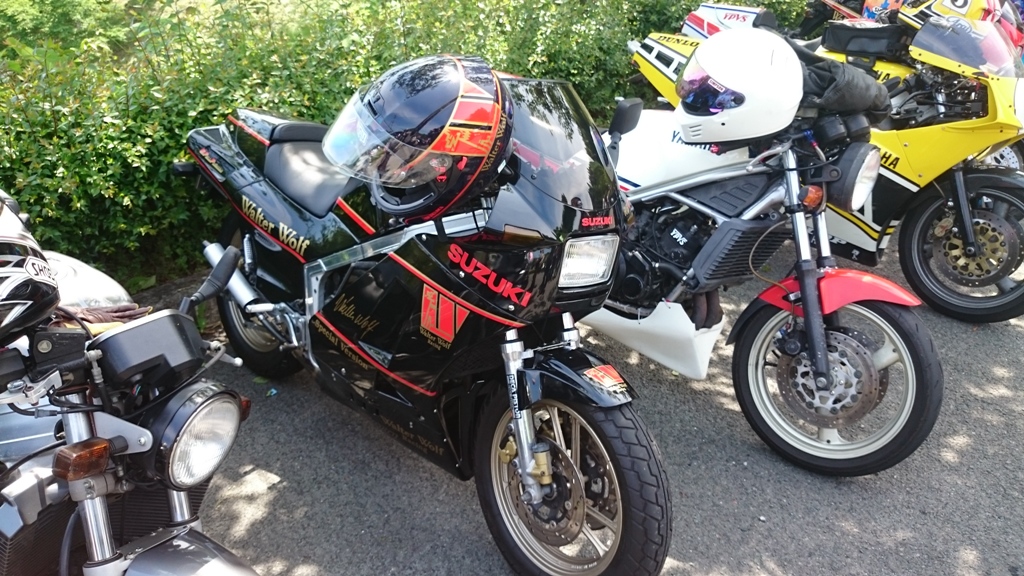
The following are images of nostalgic 2-stroke motorcycles that we have gathered. Some of you may have owned 2-stroke motorcycles in the past, but they have been out of production for more than 20 years, and the riders who gathered here are having a hard time maintaining them because parts are no longer available. We have included near-as-as-is vehicles so that the nostalgia can be seen at a glance. There were also many vehicles that had been coolly customized.
Suzuki GN50
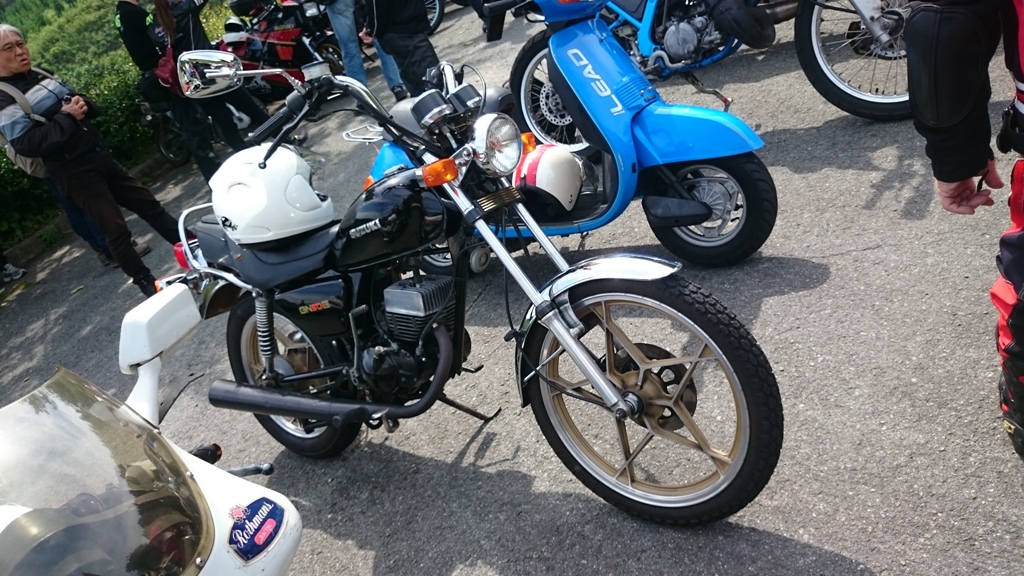
Honda Reed
Honda CRM250
Suzuki Hustler
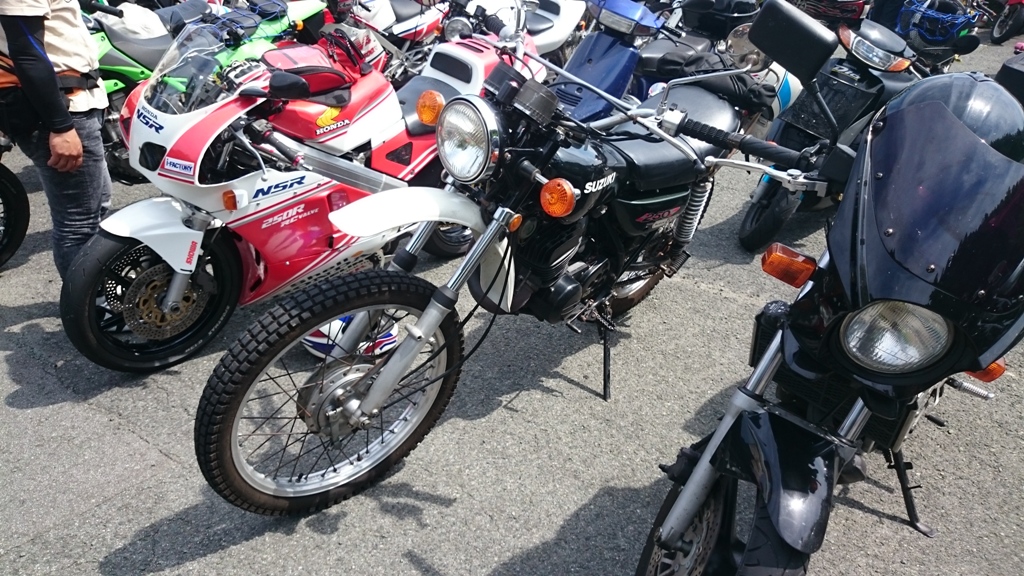
Yamaha RZ350
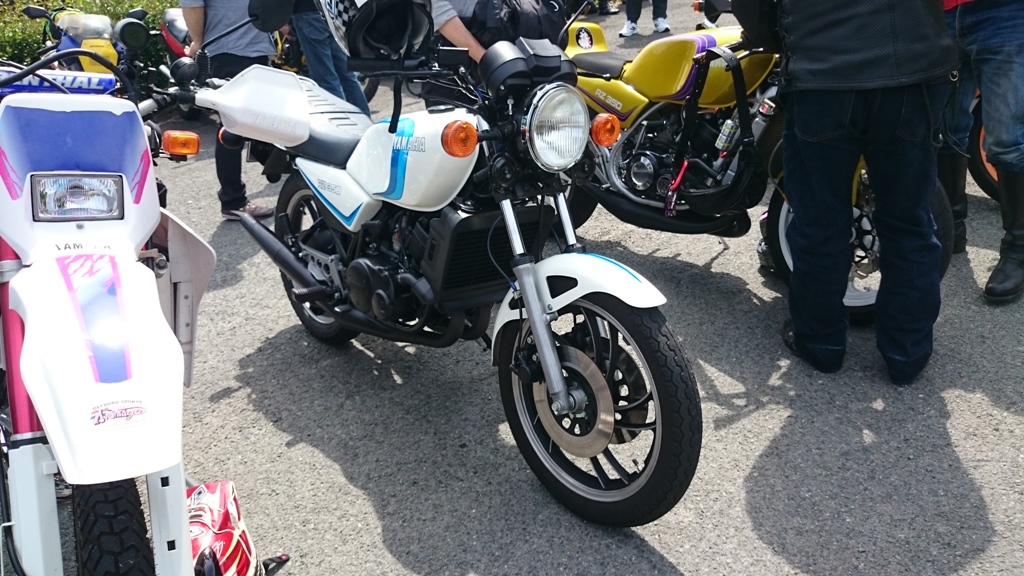
Yamaha DT50
Honda NSR250
Yamaha RZV500 and TZR250
Suzuki RG500Γ
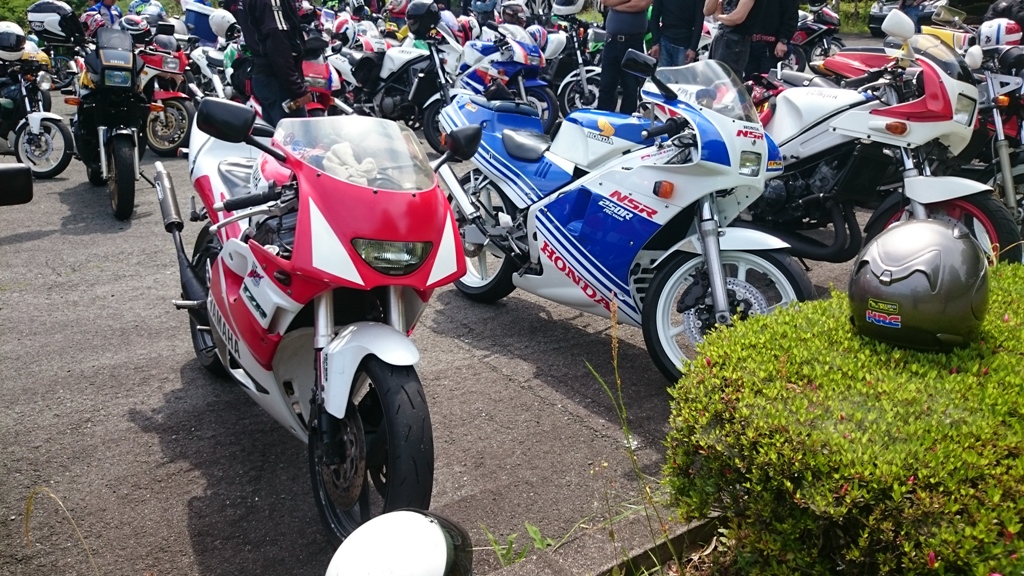
Honda MVX250F with stock seat cowl and stock dummy muffler tool box.
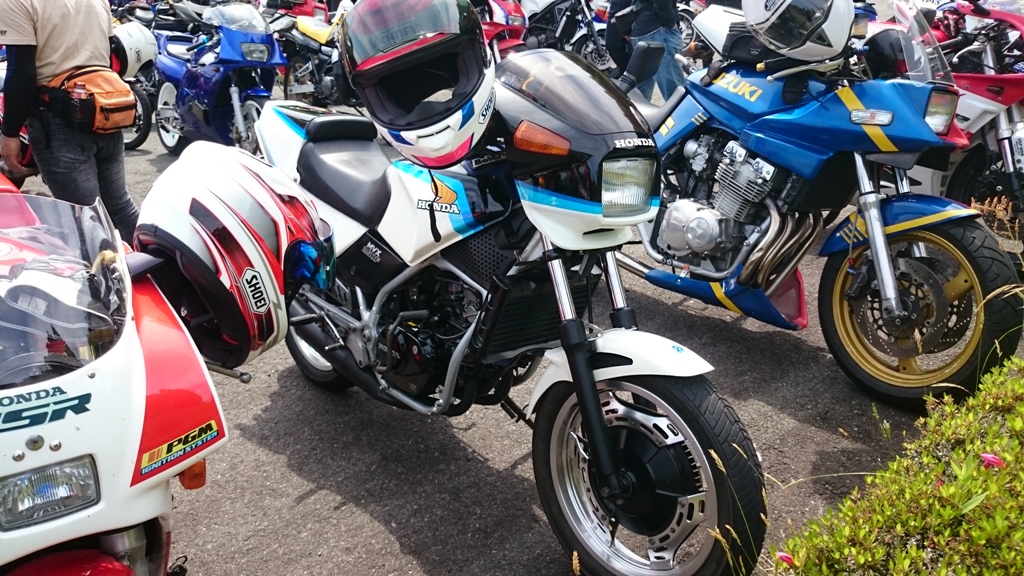
Yamaha TZR250
Yamaha RZV500
Yamaha TDR250
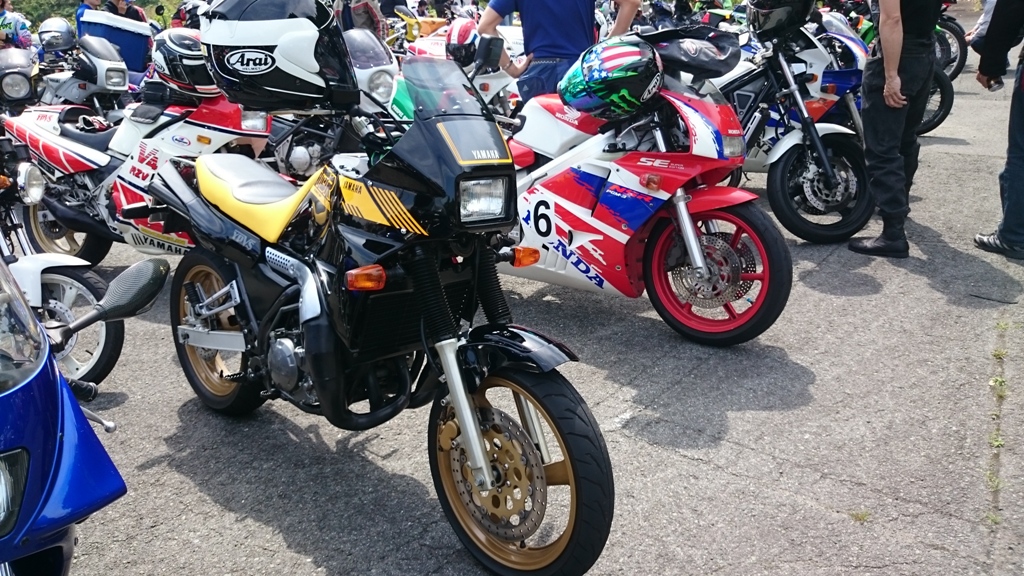
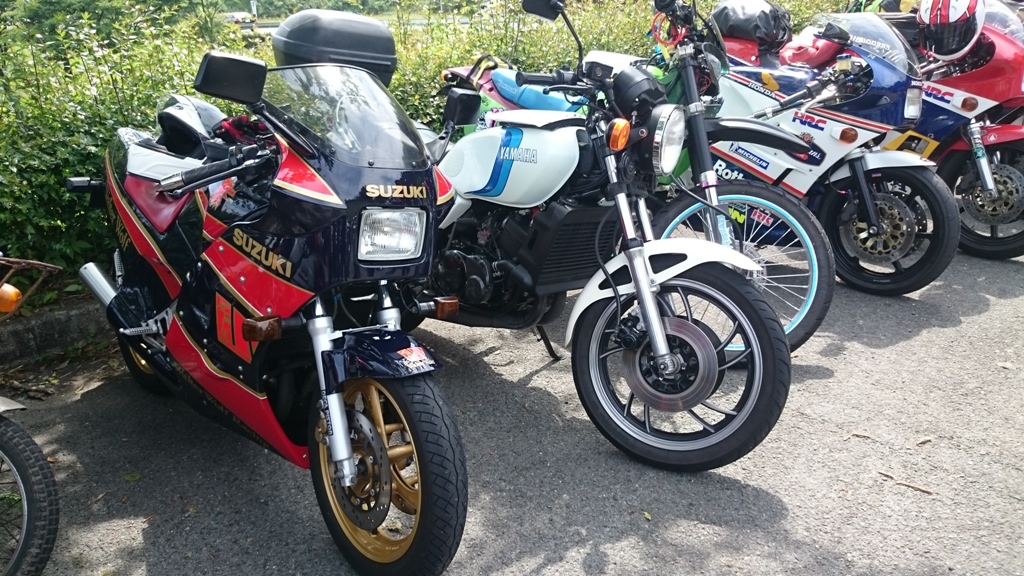
Honda NS400
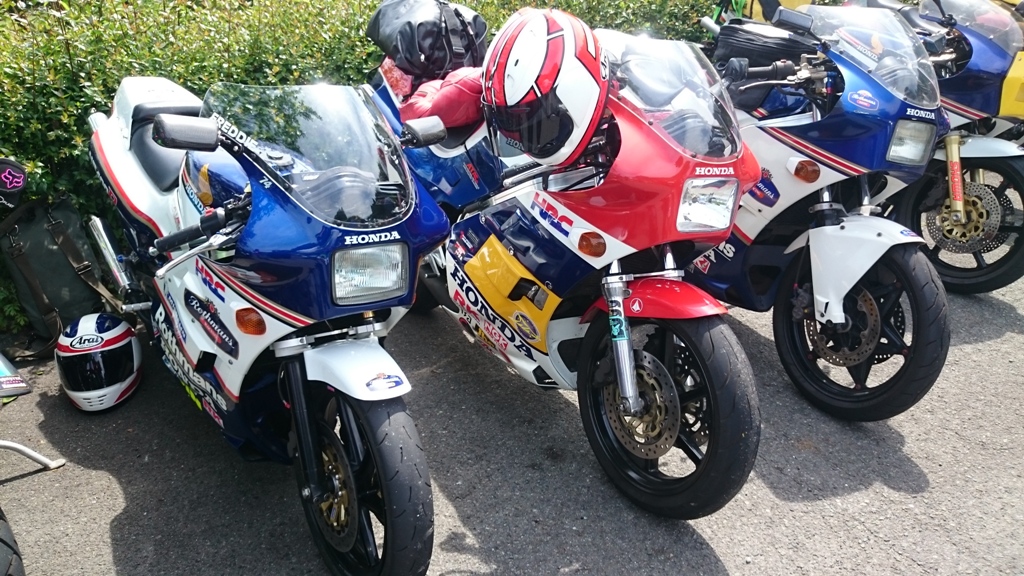
Kawasaki KR250 at the far end
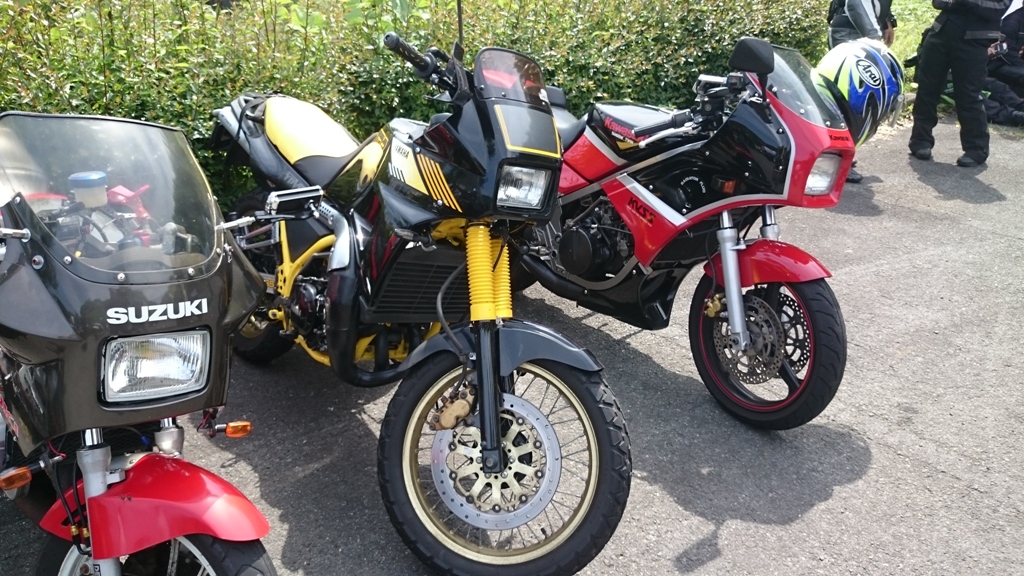
Yamaha GT50 I had a lot of my high school classmates on it. It was super nostalgic.
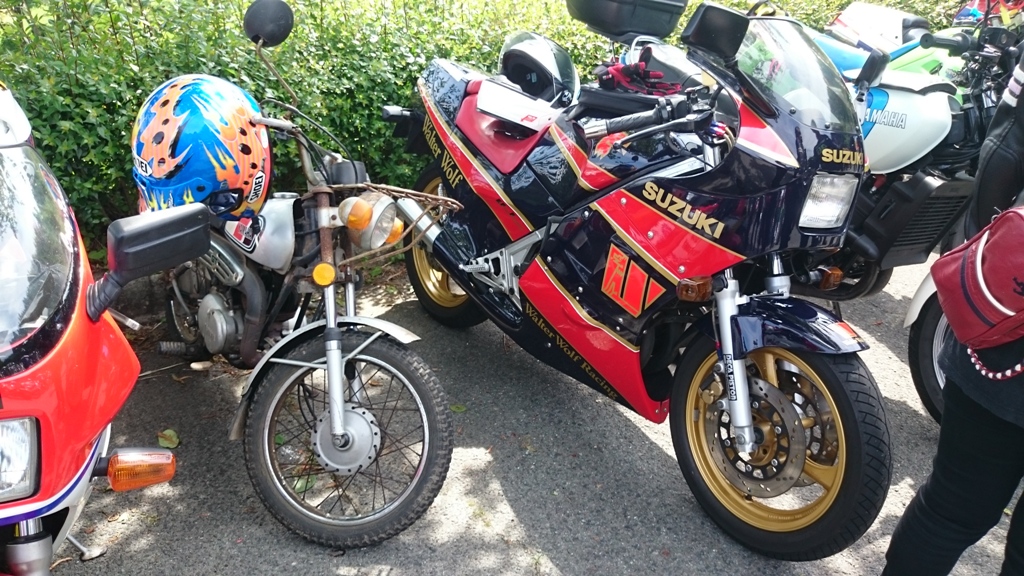
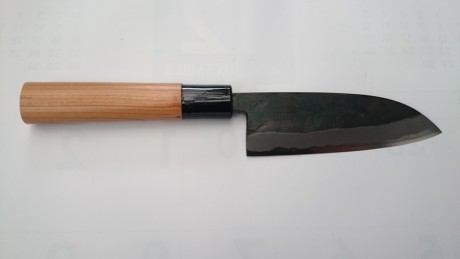
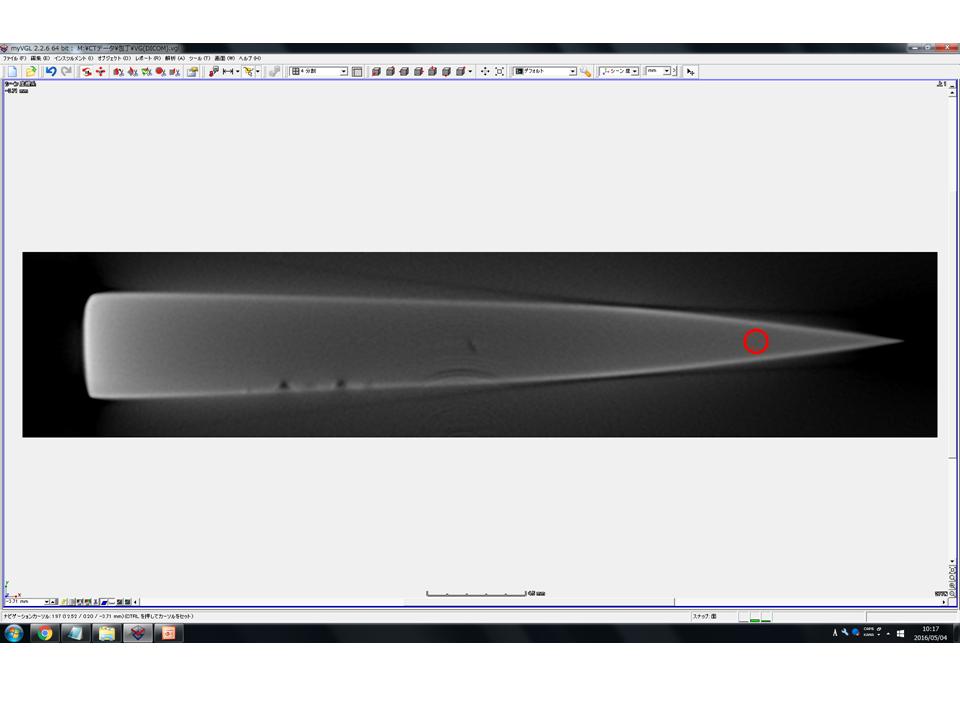
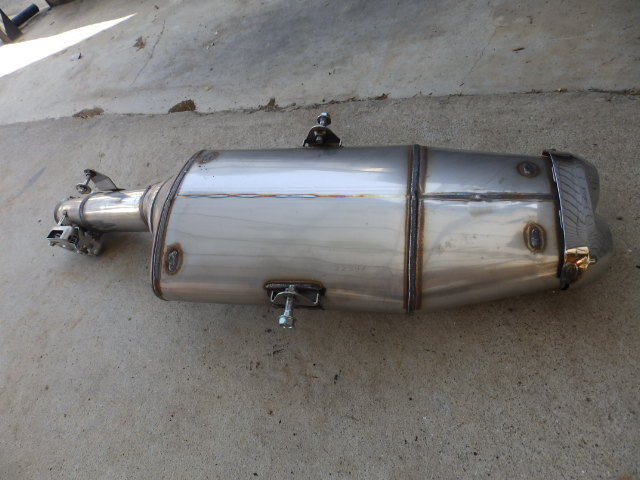
So, I hope you enjoyed it if you enjoyed it. By the way, I also own a motorcycle, and this time I scanned the muffler out of curiosity. The picture below shows the appearance of the muffler to be scanned by X-ray CT. The material seems to be composed of stainless steel sheet metal.
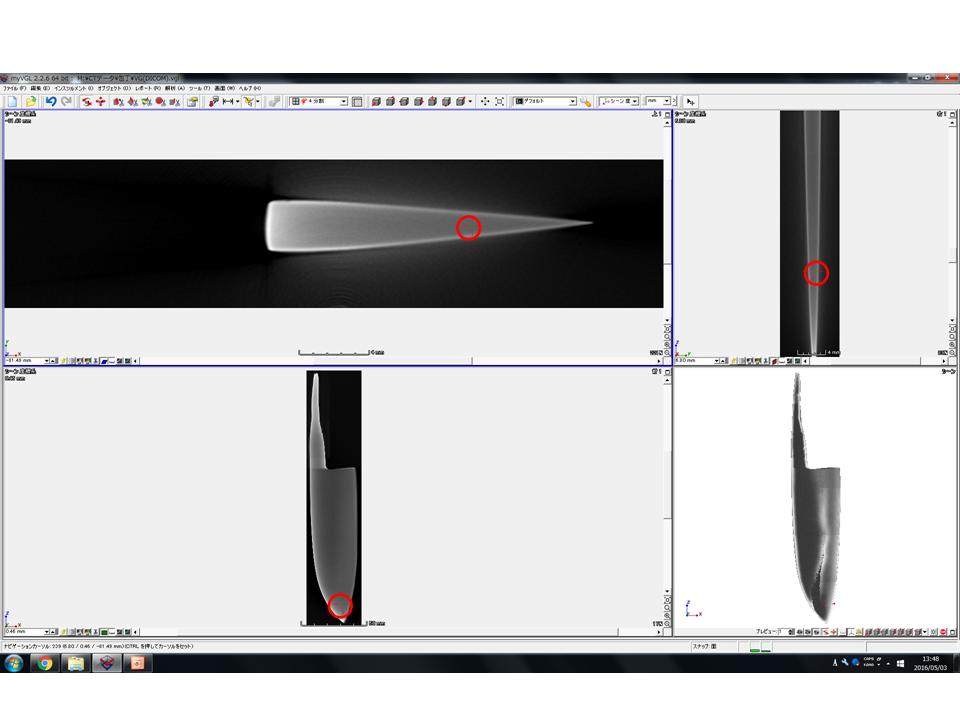
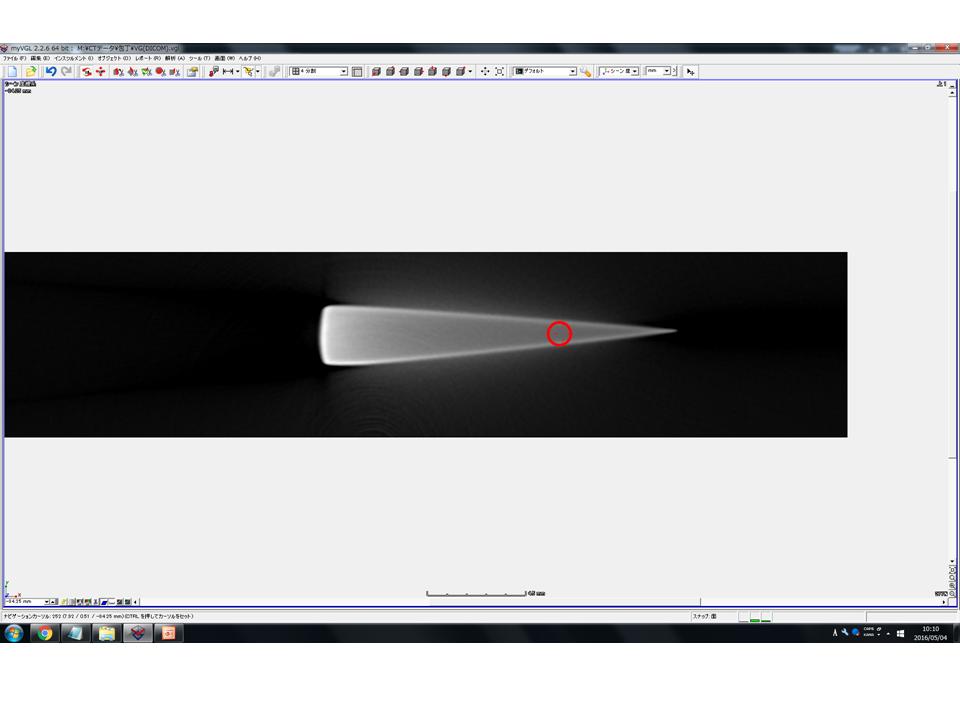
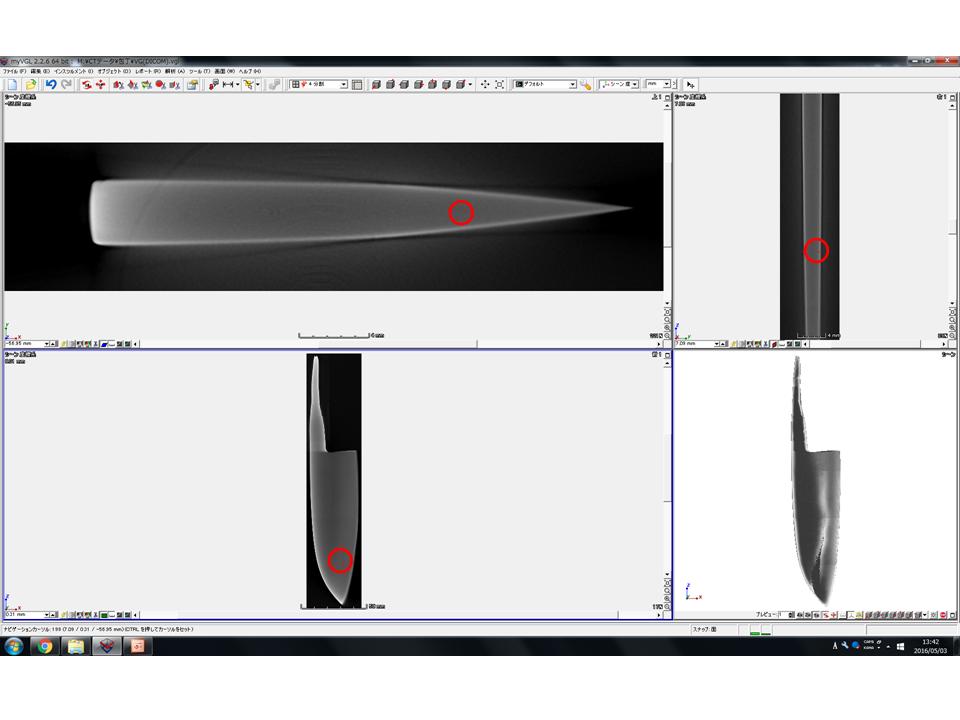
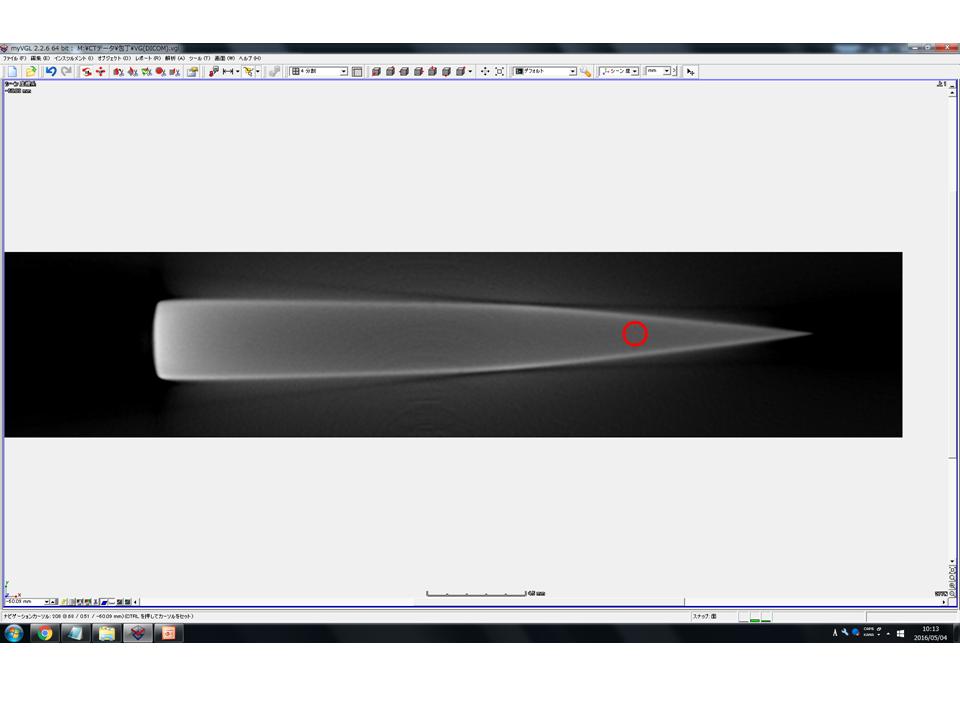
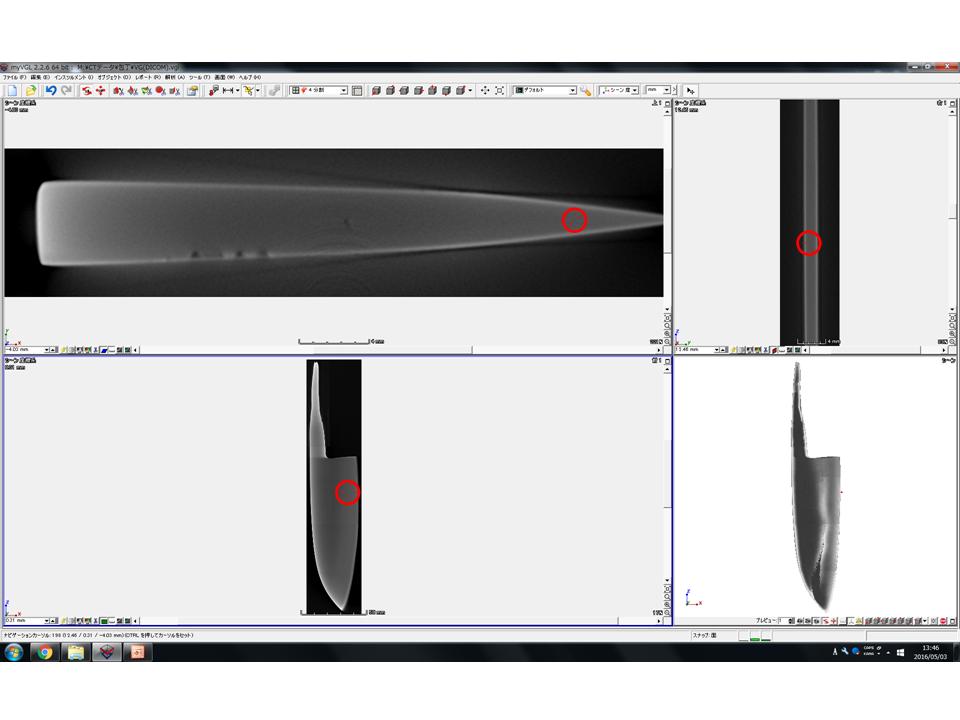
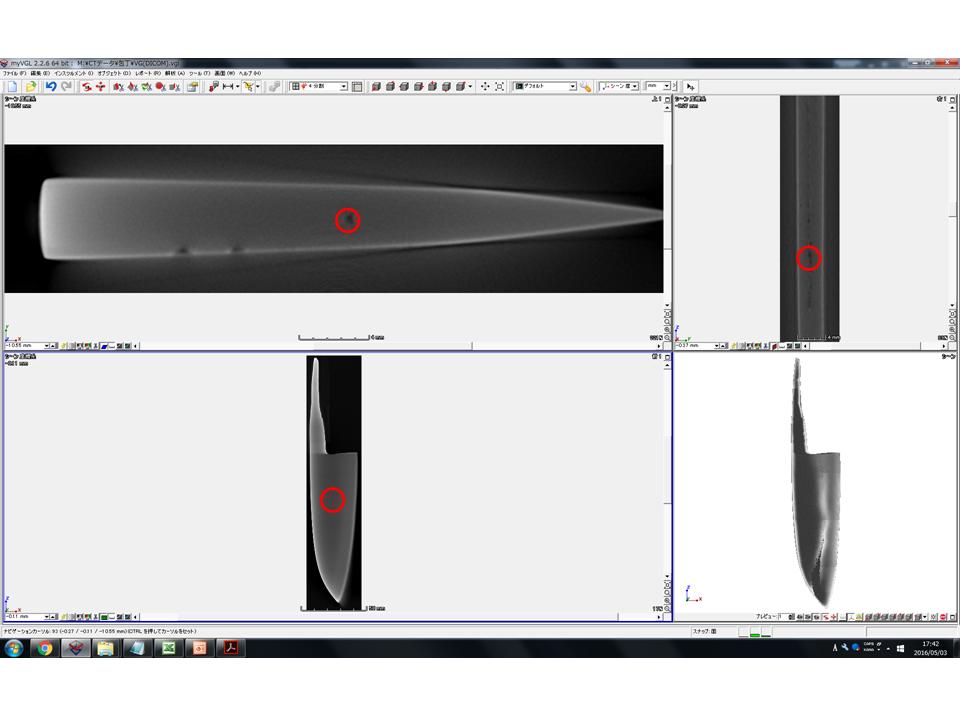
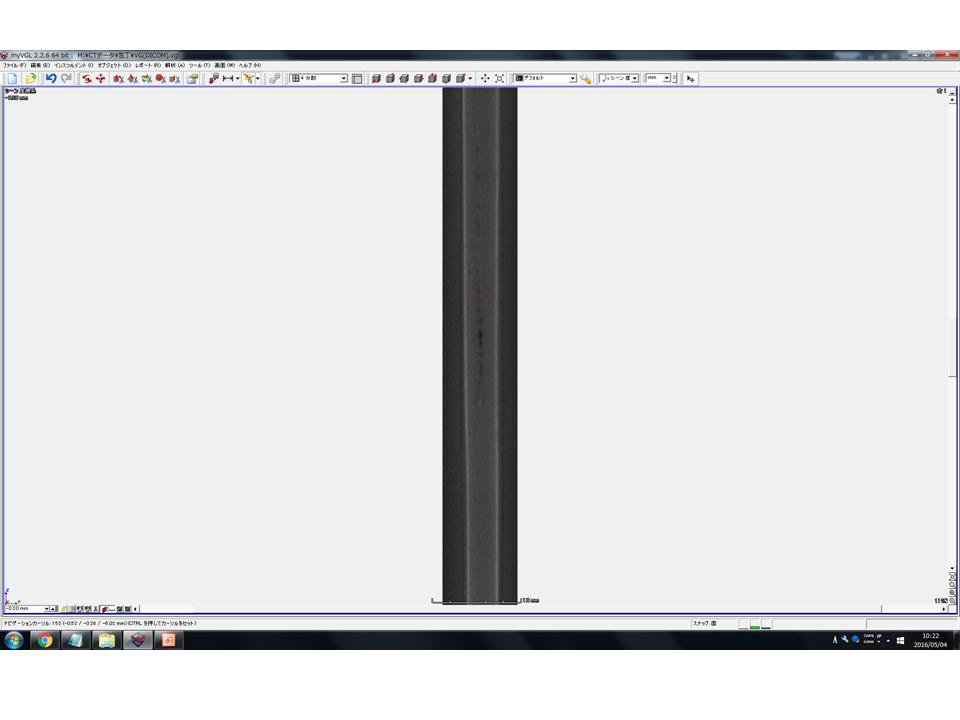
And the following images are the scanned images. The left side is a cross-sectional CT image and the right side is a 3D image.The 3D image is easy to see the internal structure. The structure is welded and bent, so there is a certain amount of stress left in the product itself. If the product is physically cut to check the internal structure, this stress is released and the internal structure may change slightly from what it was before the cutting. In such cases, it would make more sense to use X-ray CT for nondestructive observation and dimensional measurement. Click on the photo to enlarge.
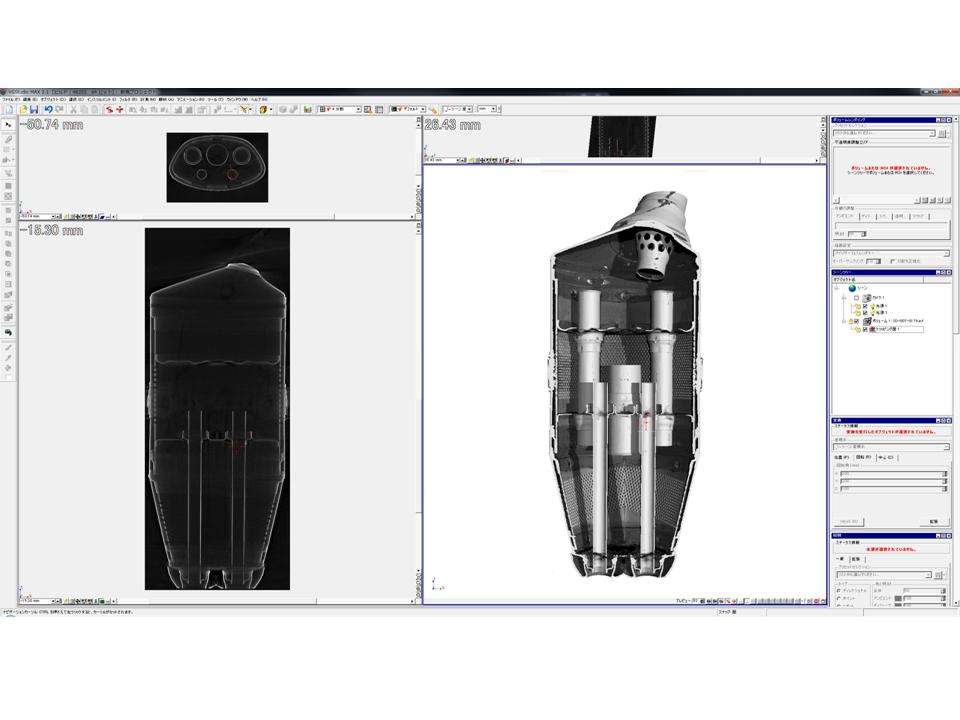
The following are cut-in videos from the Y-axis and Z-axis directions, but we can also create cut-in videos from any direction.
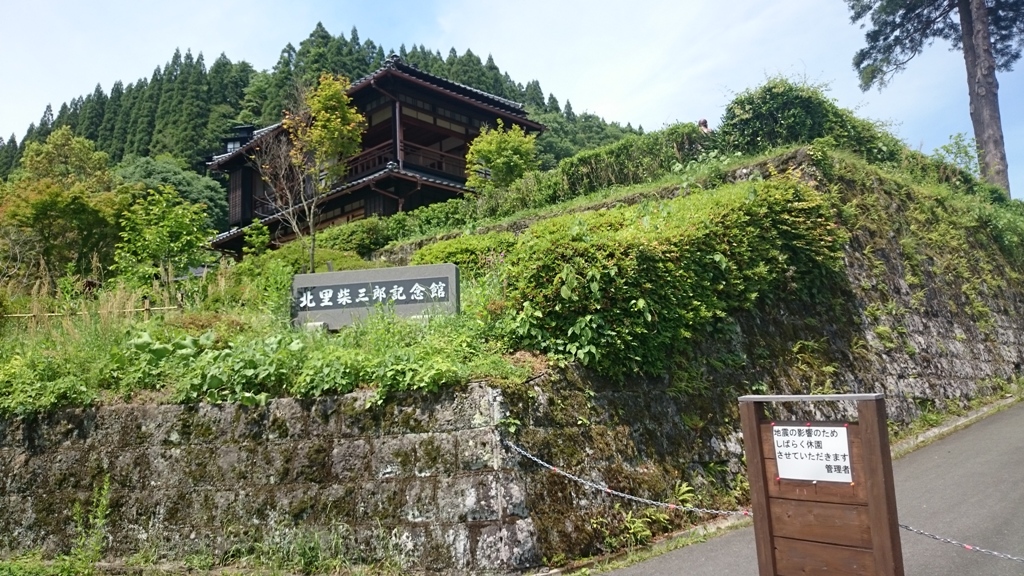
I also wanted to visit the Shibasaburo Kitasato Memorial Museum, which is located in the neighborhood of Mokkonkan and is famous for its bacteriology, but unfortunately it was closed due to the earthquake. Shibasaburo Kitasato is also the founder of Kitasato University, where Dr. Satoshi Omura won the Nobel Prize in Physiology or Medicine last year. He is a great man, isn't he?
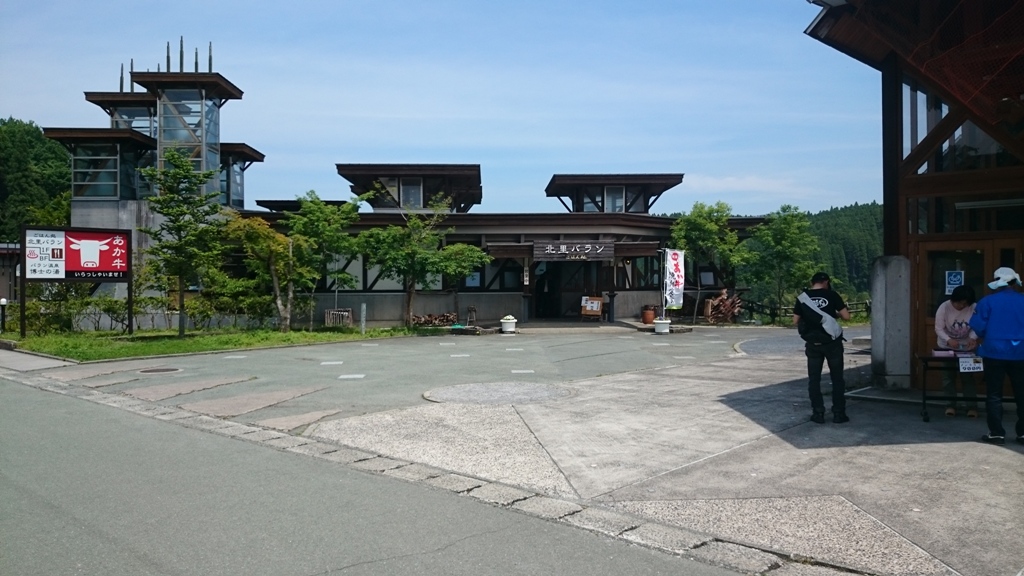
For lunch, we went to a restaurant called "Kitasato Baran," also just a short walk away.
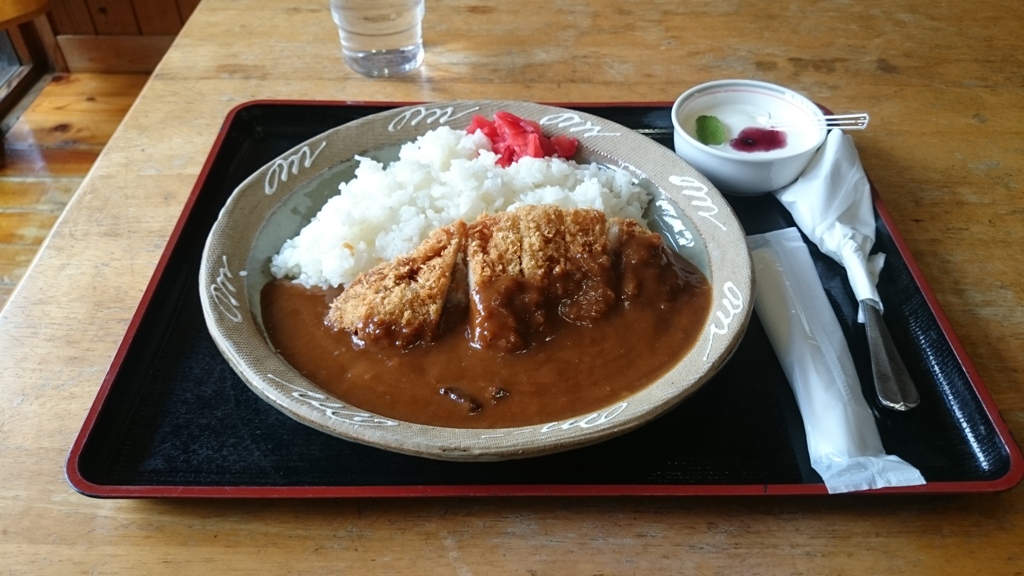
We had a delicious curry cutlet with thick (red beef?) meat. We had a delicious curry with pork cutlet filled with thick (red beef?) meat.
On the way back, I dropped in at San-ai Rest House. If it is usual this time of year, it will be the effect of the earthquake though it is a parking lot of heavy congestion, but it is not that much. I hardly saw any tourist buses this time, not only in the parking lot.
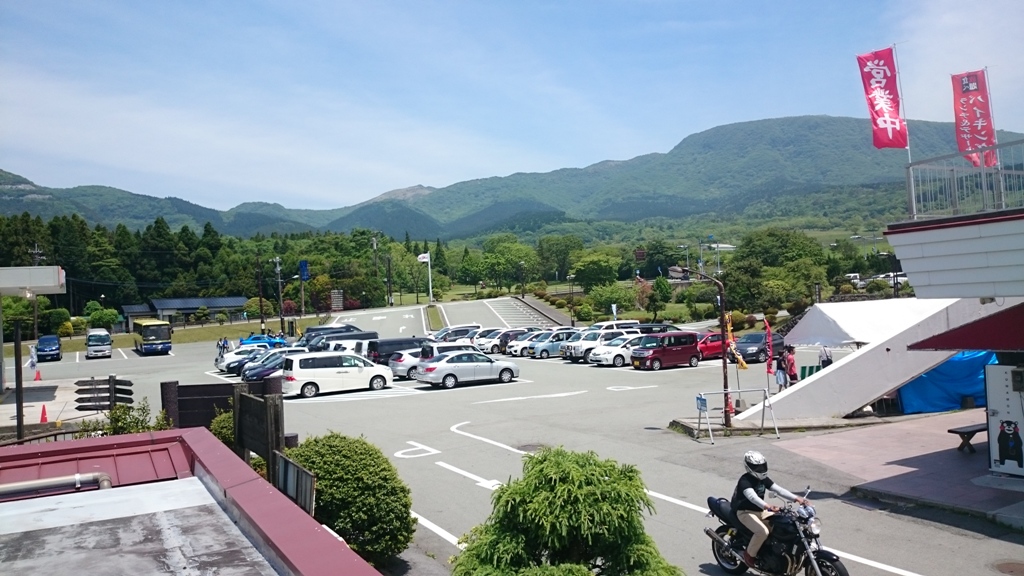
This is a parking lot that often attracts motorcycles, but again, the number is much smaller than usual. On a nice Sunday at this time of the year, there will be an overflow of bikes. At this time of the day (after noon), you can see many kinds of bikes. It is a little sad because it is not as lively as usual.
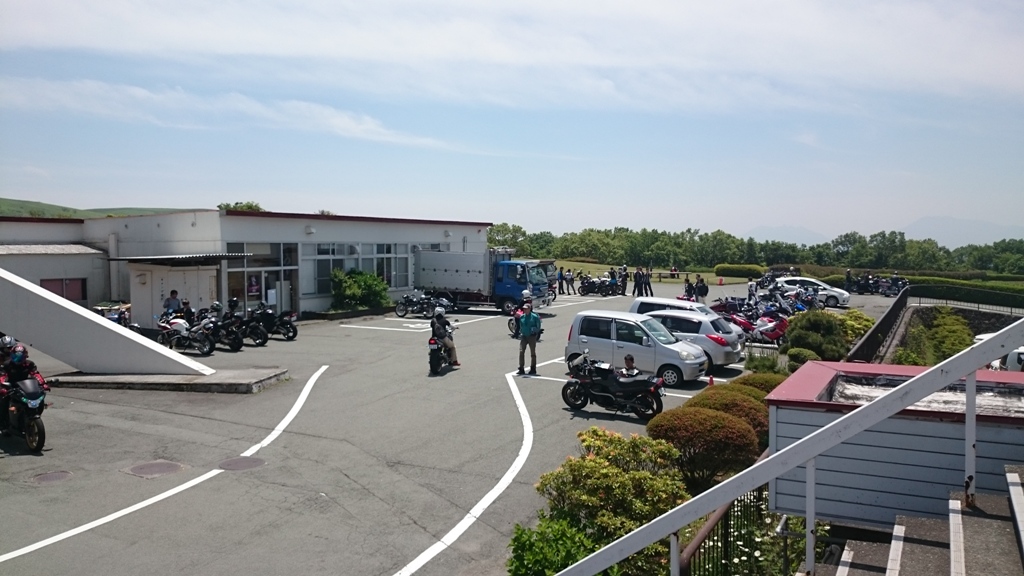
I stopped by Ubuyama Ranch, but there were fewer than usual.
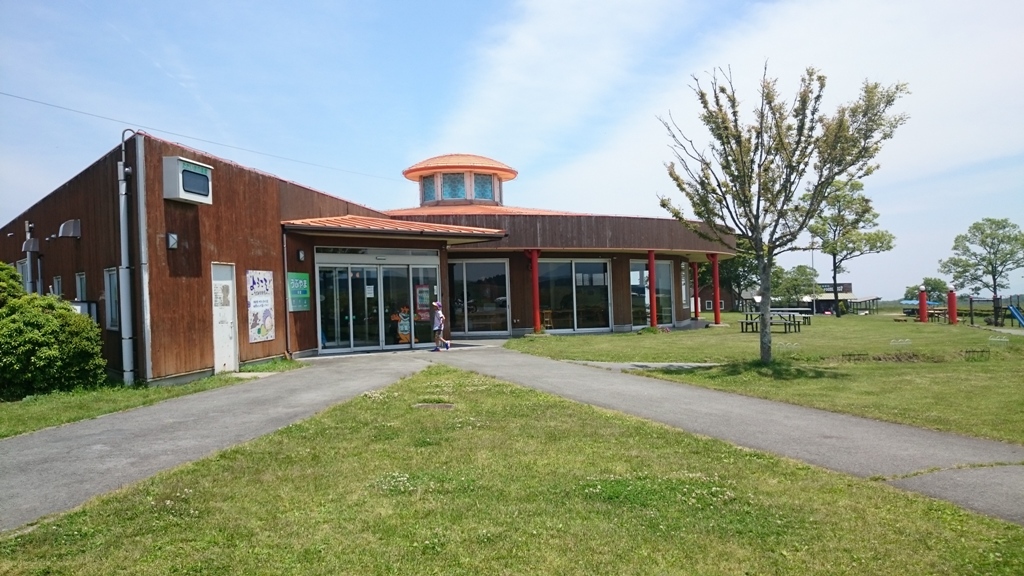
I also went to the Minamiaso side. Minami Aso is quieter and has a different atmosphere than before. I hope that Aso will soon be back to the lively and bustling place it used to be with many tourists. I would like to support them as much as I can by visiting them more than ever.
The photo below shows a place about 1 km from the Minami-Aso side of the Aso Ohashi Bridge, which collapsed due to the earthquake, and was closed to traffic and off-limits. Some people (including some with children) ignored the situation and entered the area, which was a bit nerve-wracking. Of course, I did not do so and made a U-turn and headed home. After returning home, I saw on Google's satellite image that the road had collapsed just to the right of the photo of this location.
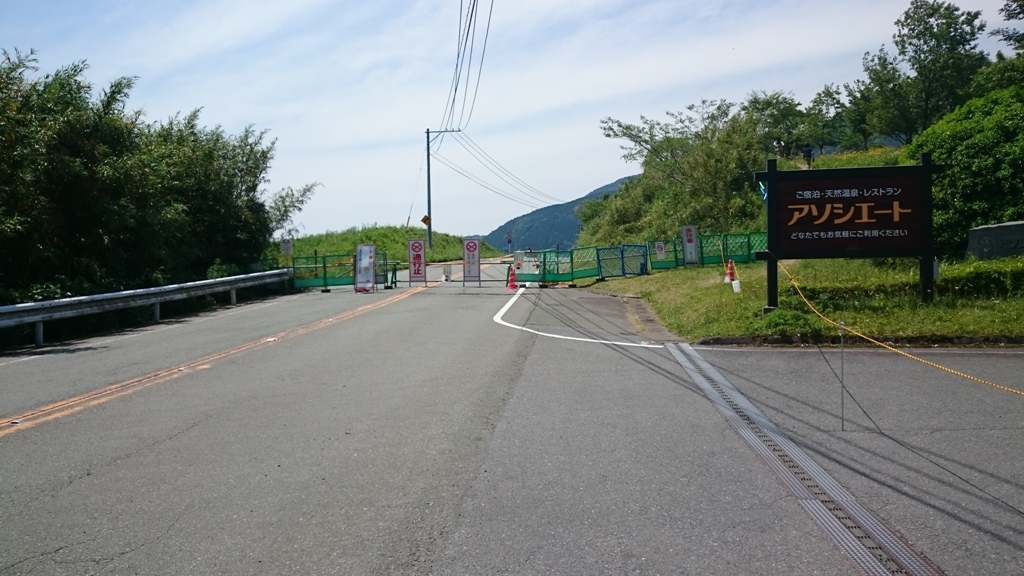
After this, I went home through Mashiki Town via Green Road. Mashiki Town is located a few kilometers from my home and I used to use it as a touring and commuting route in the direction of Aso. I had seen the post-disaster scenes in Mashiro many times on TV, and was quite shocked to see the usual Mashiro town in ruins, but I was even more shocked to actually go there and see it with my own eyes. I had the impression that every part of the town I remembered had been deliberately destroyed by someone's will. My own house also suffered from falling roof tiles and collapsed walls, but the scale and level of the destruction was so different. I think for the first time I understood why a friend of mine who suffered from the Great Hanshin Earthquake once told me, "Come and see what a natural disaster looks like while you still can. Although what we can do is limited, we will do what we can to help Mashiki Town and other affected areas recover as soon as possible.